Research
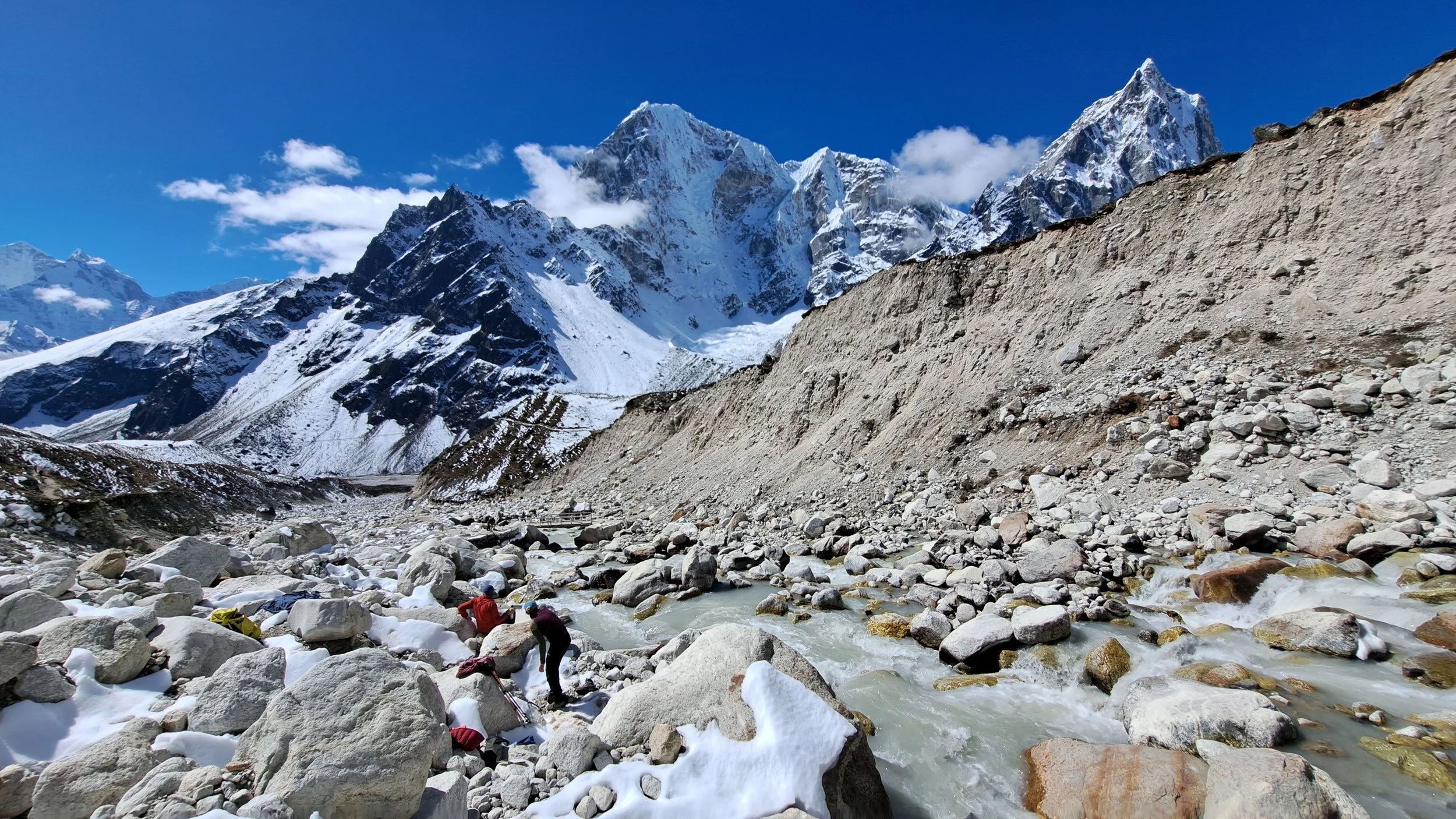
Mountain rivers are among the least understood and most rapidly changing aquatic ecosystems on Earth. Our work spans the Nepal Himalayas and the Colorado Rockies, combining field sampling in remote high-elevation watersheds with process-based biogeochemical modeling. Our primary active program is Hi-RISE (Himalayan glacier-fed Rivers and Stream Ecosystems), led by the University of Leeds and funded by the UK Natural Environment Research Council. Glacial rivers supply water to nearly 2 billion people worldwide, yet their biogeochemistry remains almost entirely uncharacterized in central Asian headwaters. The Maavara Lab is focused on quantifying carbon, nitrogen, and greenhouse gas dynamics in glacier-fed streams across the Everest, Annapurna, and Manaslu regions, with seasonal sampling designed to capture pre- and post-monsoon variability.
Previous work in the Colorado Rockies used process-based models to trace nitrogen cycling in the East River Watershed, quantifying the contributions of bedrock weathering and atmospheric deposition to nitrogen export, and examining how watershed structure and vegetation regulate nutrient retention and release across neighboring catchments.
Mountain river biogeochemistry
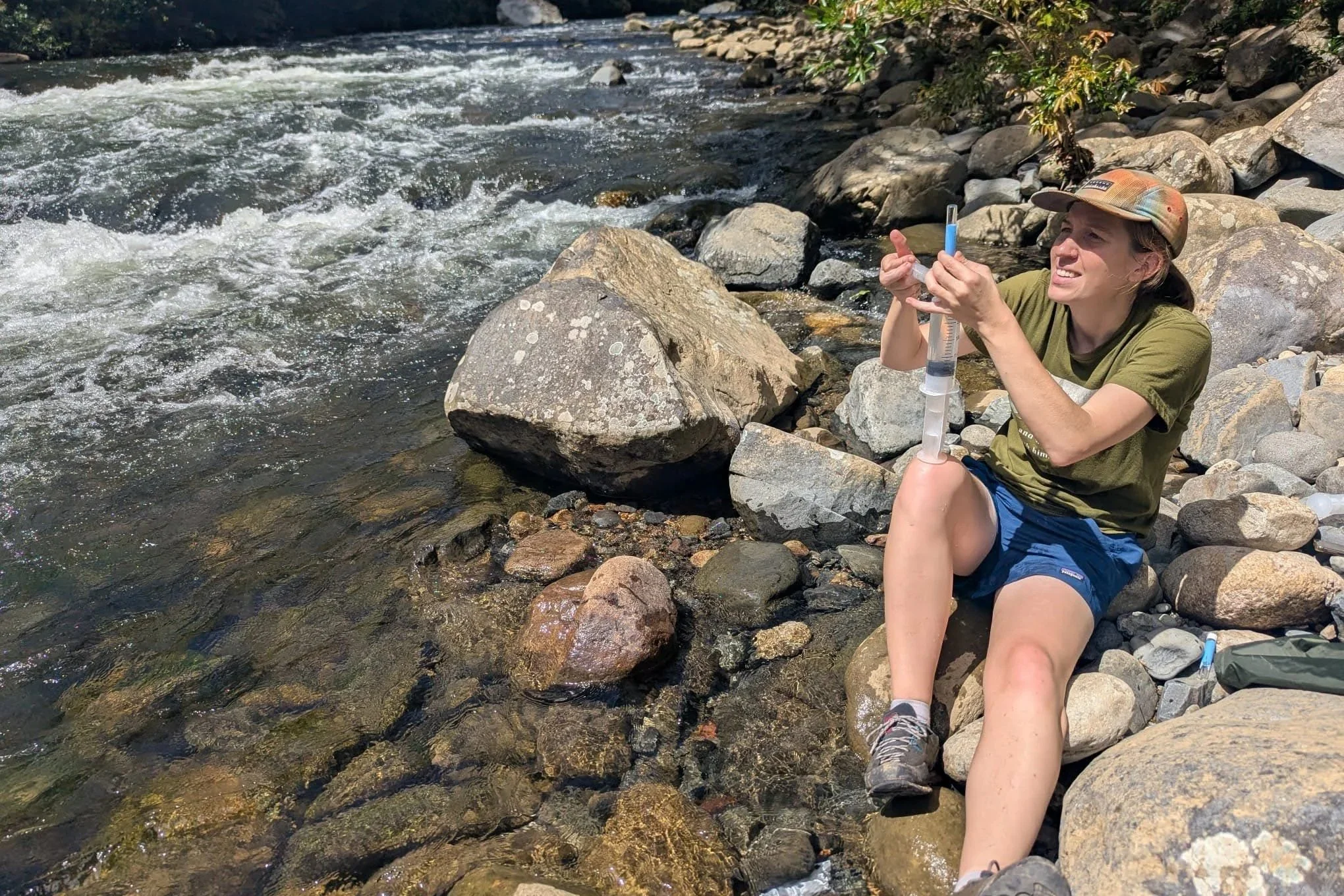
Nitrous oxide (N₂O) is responsible for 6–10% of global climate warming, and freshwater emissions have increased by more than 400% due to anthropogenic nitrogen loading. Global budgets still mostly rely on IPCC emission factors that are not grounded in mechanistic understanding, a gap we have worked to close for over a decade. We developed early mechanistic global models of freshwater N₂O production via nitrification and denitrification, and contributed to the first ever global nitrous oxide budget, which directly informed the IPCC’s 6th Assessment Report. More recently, we contributed to collaborative work that showed that inland waters can act as N₂O sinks, a finding that further complicates global budgets that assume rivers only emit.
Current work combines cross-biome field campaigns across five continents with high-frequency monitoring using bespoke, state-of-the-art sensors, and knowledge-guided machine learning, with the long-term goal of replacing emission factor approaches with mechanistically grounded global models, and more fundamentally, to quantify day-to-day drivers of nitrous oxide production and consumption in streams, including microbial controls.
Nitrous oxide in river networks
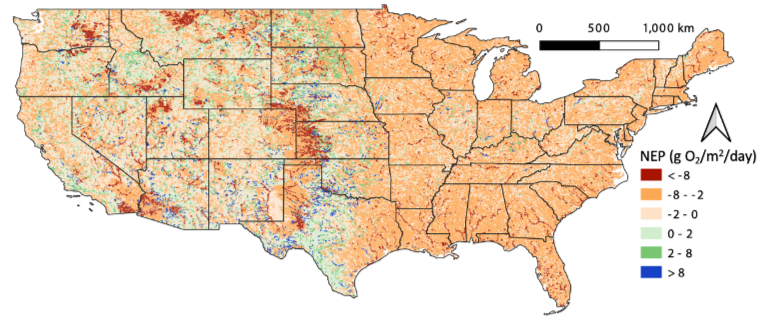
From headwaters to coastal zones, rivers transform the carbon that passes through them, releasing it to the atmosphere, burying it in sediments, or delivering it to the ocean. Quantifying these fluxes at regional and global scales is one of the central challenges in Earth system science, and a defining thread of our work. We have contributed to major international efforts to constrain inland water greenhouse gas emissions, including the RECCAP2 initiative, coordinated by the Global Carbon Project, which produced comprehensive regionalized estimates of CO₂, CH₄, and N₂O emissions from rivers, lakes, and reservoirs globally. Modeling work in the Connecticut River Watershed revealed that photomineralization, the sunlight-driven oxidation of dissolved organic carbon, is a minor DOC sink in temperate rivers under most conditions, but that the dominant controls on whole-watershed DOC uptake shift seasonally: lakes drive uptake in summer, while rivers dominate in winter. Our recent paper in Science produced the largest analysis of river metabolism to date using machine learning to show that western US rivers account for more than 70% of river metabolism nationally and that many act as carbon sinks. Current work extends this framework to new regions and continues to develop data-driven approaches to constrain carbon fluxes at continental and global scales.
Large-scale carbon cycle modeling
Rivers in the Anthropocene: damming
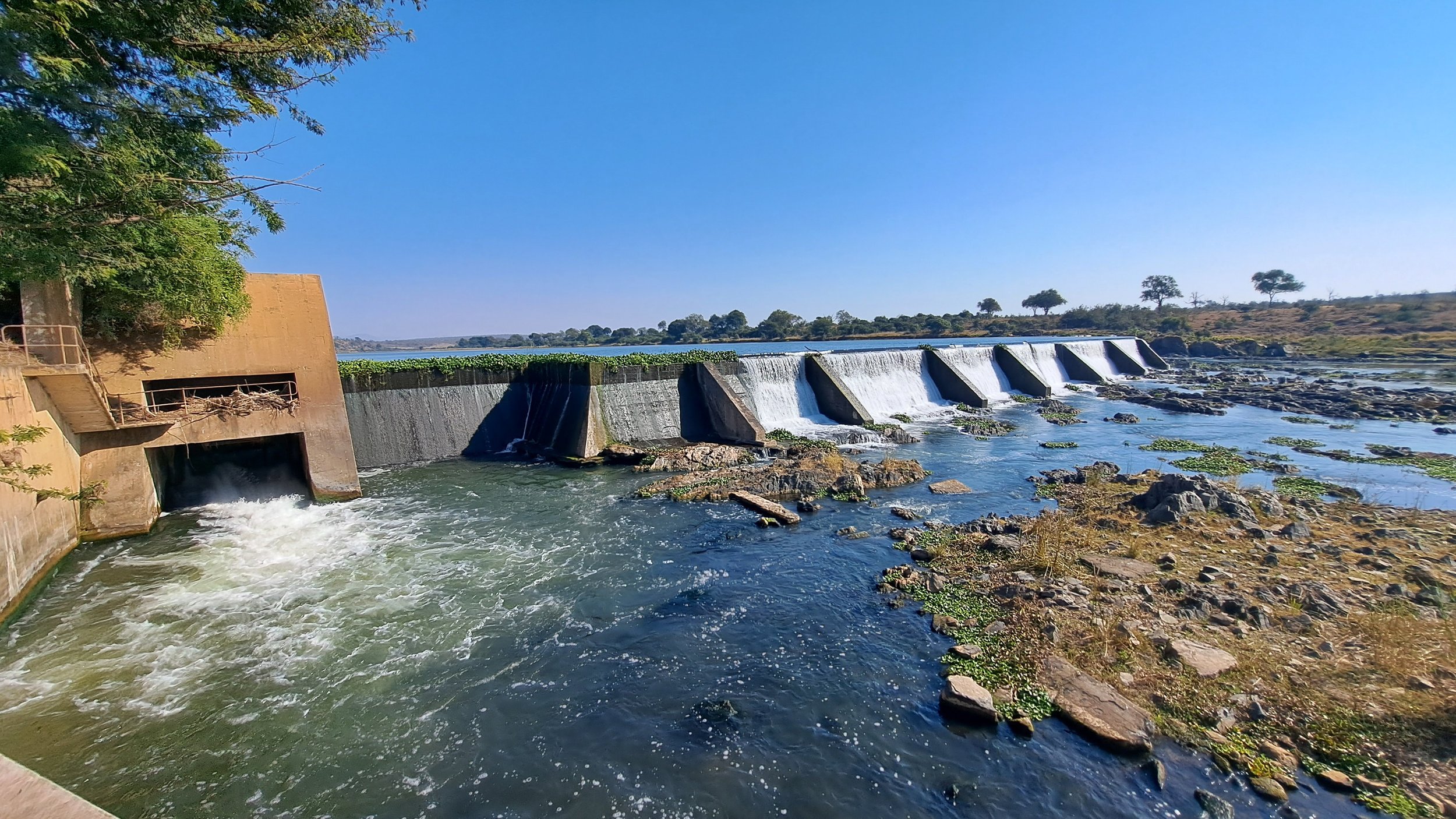
Dams are among the most pervasive human modifications to river systems, intercepting the flow of water, sediment, and nutrients along river networks and fundamentally altering the chemistry of what reaches the coast. Over more than a decade of global process-based modeling, we have quantified how dam construction has altered the cycling and export of silicon, phosphorus, nitrogen, and organic carbon at the global scale, work published in PNAS, Nature Communications, and Nature Reviews Earth and Environment, among others. This body of work established that damming systematically decouples the stoichiometry of nutrients delivered to coastal oceans, with consequences for coastal productivity and ecosystem health.
More recently, including through involvement in the EuroFlow Innovative Training Network, we have engaged with questions of environmental flows, i.e. the management of river discharge to sustain ecological function downstream of dams, bringing a biogeochemical perspective to a field traditionally dominated by hydrology and ecology. We are also increasingly interested in the biogeochemical consequences of dam removal, particularly in the United States, where aging infrastructure and ecological restoration goals are driving an accelerating wave of dam removals that raises fundamental questions about ecosystem recovery and biogeochemical legacies.